By Sam Brill [NDI Alum]
Research has consistently shown that arts programs help young people build the skills they need to thrive. Participation in disciplines like dance, music and theater engages students in team-based work that culminates in shared achievement, like a performance. Experiences like these foster both a strong sense of self and a vital sense of belonging. As the Wallace Foundation notes in a 2025 report, the arts help young people “develop identity” and “strengthen social bonds.”
I know this to be true from my own experience in dance.
I never considered myself a dancer. I was the boy with two left feet who lived for baseball season. And yet, it was a childhood dance class that gave me my confidence and opened my eyes to new possibilities. Today, as I prepare for medical school and work as a clinical research coordinator in the Bronx, I can draw a straight line from that dance class to the career I am building in medicine.
My older brother Max was lucky. His elementary school partnered with the nonprofit National Dance Institute (NDI), which sent teaching artists to provide dance instruction as part of his regular school day. My school had no such program, so my parents lobbied to get me into NDI’s weekend classes.
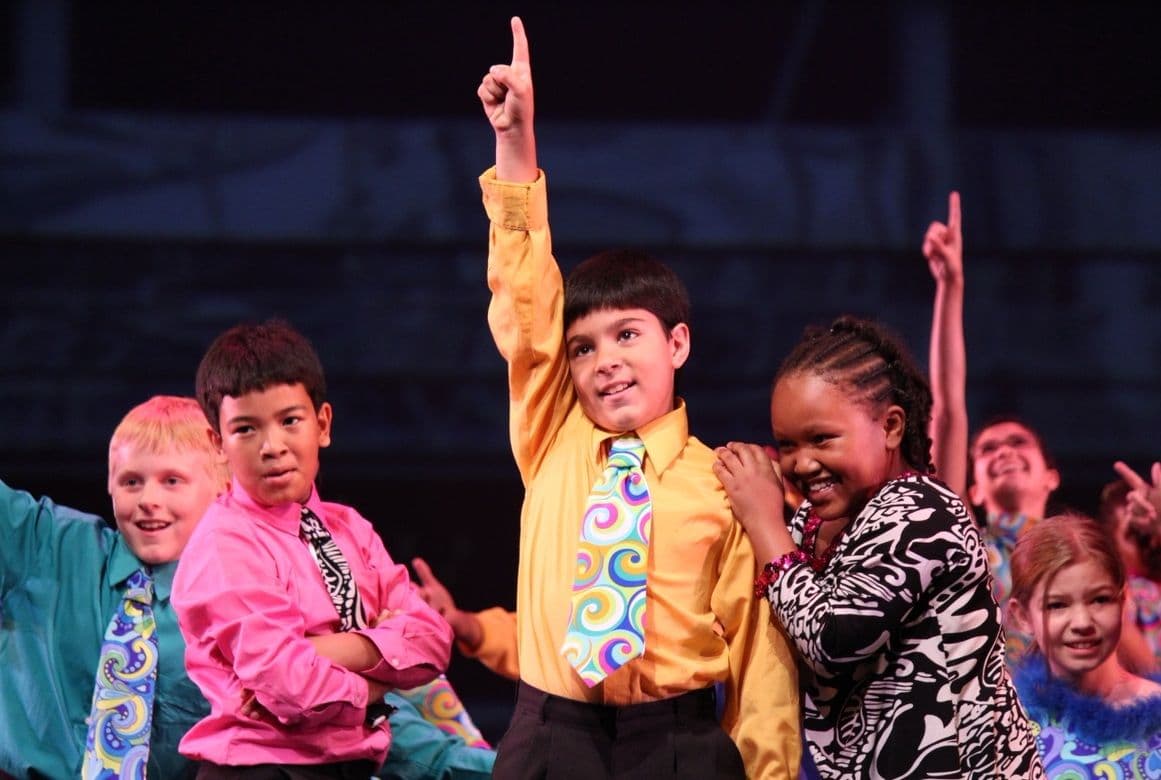
There the teaching artists treated us with seriousness and respect and made me feel immediately welcome. I learned how to move in new and creative ways, how to follow instructions and how to summon bravery for a performance.
Each year NDI’s dance program had a new theme, and in 2011 the theme was science. We learned choreography for a piece about DNA, and it lit a spark in me. Our teacher Andrea showed us microscope images of DNA’s double helix, her inspiration for the piece. Each dancer took their place in the twisted ladder, pairing A with T and C with G. Embodying a nucleotide in this helix connected me to something greater.
That DNA dance piqued my curiosity about science, how bodies work and how people could heal.
From that year forward, my studies and professional interests turned more toward athletics and medicine, but I retained a deep appreciation for dance — as a form of social connection, joyful expression, and a gateway for discovery. The Wallace Foundation’s research affirms my experience, noting that arts programs “can open up new worlds for young people within their communities and beyond.”
In high school I volunteered as a guide for dance classes at a school for students with vision loss. Their joy at being seen, included and challenged to learn new movements reinforced my conviction that dance holds value for all young people.
While studying pre-med coursework at Tufts and managing the college’s baseball team, I took a West African dance class on campus. Following graduation, when I ran the NYC Marathon, I did so as a fundraiser for National Dance Institute. Hearing NDI’s cheers at mile 22 made me grateful for all those teachers who never quit on the sports kid. They got me to the finish line.
In this way dance classes gave me so much more than technical knowledge of the craft. They gave me enduring confidence and community. There is no greater feeling than belonging to an ensemble, knowing your part is vital to the whole — be it in the studio, on the field or as part of a research team. It is because of dance that I am a more informed and multidisciplinary thinker and a more empathetic and engaged community member.
If these are the outcomes we want for children, why isn’t dance a core offering in schools? Why are the arts so often deprioritized?
I have heard the arguments: School leaders navigating limited time and budgets feel compelled to focus on literacy and STEM. Many educators and parents also hold the false impression that there are no viable career pathways in the arts, but framing the arts as impractical, or as a luxury extra, is to fundamentally misunderstand what they offer our young people.
As the National Endowment for the Arts notes in its Snapshots of Arts Education report, in-school arts access is associated with positive student reporting on social-emotional attributes, including higher ratings of school belonging, peer social support, grit and motivation.
Data on National Dance Institute’s impact is equally compelling. WolfBrown’s research on NDI’s in-school programs (like the one my older brother enjoyed) found their dance classes helped narrow the engagement gap between students identified by their teachers as struggling and those identified as thriving.
Truly nothing rivals the fully embodied and collaborative experience of learning, rehearsing and performing a dance with your peers. When I finish medical school someday, I will draw on the same attributes I learned in childhood dance classes: precision and discipline, yes, but more importantly, a spirit of collaboration and the confidence to meet hard challenges head on.
If we want young people to relish the joy of learning and grow into capable, compassionate adults, dance deserves its rightful place in every school’s curriculum. Partnerships with nonprofits — like NDI — are a key way to ensure all young people can experience the power of dance.
***
Sam Brill is a clinical research coordinator at the Albert Einstein College of Medicine, a pre-med graduate of Tufts University, and an alum of National Dance Institute in New York.