By Steven Barboza
Smithsonian Magazine, Volume 20 #12, March 1998
At New York City's National Dance Institute, Jacques d'Amboise and his gifted teachers put a cast of a thousand young people onstage
Jacques d'Amboise is a master as much of the unexpected as of dance. His latest extravaganza featured blind ballerinas, a drag Queen Anne of Austria, a Charlemagne who in real life packed a gun at his ankle, a female swashbuckler, dancing tomatoes, cakewalking cake, a dastardly cardinal who commanded a corps of rats in knickers, frogs that attacked a chef who tried to make mincemeat of them, homeless children who fought with French-bread “swords," a Nobel laureate who played a buffoon, and (irony of ironies) a thousand rambunctious children who played dead, lying peeplessly for a whole minute.
"Meilleurs Amis" ("Best of Friends"), d'Amboise's salute to the bicentennial of the French Revolution, was a Disneyish show starring children who fancied themselves dancers. It opened and closed on a Manhattan stage big enough to double as a playground. The DeMille-size cast, from schools around the city, caused DeMille-scale problems. For d'Amboise however, the spectacle was well worth the headaches it caused; once again he had proved that city kids, rich and poor, black and white, can learn to take charge of their lives by letting dance, with all its storybook imagery, cast a spell over them.
D'Amboise has led thousands to the stage, inspiring them to dance enthusiastically for audiences only a few times larger than the cast itself. His rapport with children and his knack for driving professionalism into them have earned him the title Pied Piper of Dance.
He developed his sense of fantasy as a boy in Manhattan's Washington Heights, where he grew up amid gangs like those in West Side Story. On streets bordering Harlem, he learned about zip guns and rumbles; while at home his mother, a French Canadian who liked reading about the court of Versailles, encouraged in him a fondness for high culture and chivalry. His buddies grew up to become criminals or crimefighters, and he headed for a world of heroes and villains, princesses and princelings. Today, at 55, he remains a boy at heart, infatuated by fables.
D'Amboise was for 32 years a principal dancer for the New York City Ballet. He began dancing at age 7, when his sister's ballet teacher challenged him, a devilish spectator who interrupted classes with irritating noises, to do a series of leaps called changements. He graduated to plies and went on to George Balanchine's School of American Ballet. At 12 he was performing with the Ballet Society, the predecessor of the New York City Ballet, and a few years later joined the NYCB. By 17 he was dancing major roles, and by 21 was appearing in Broadway shows and in films, among them Seven Brides for Seven Brothers, Carousel and The Best Things in Life Are Free.
D'Amboise became Balanchine's favorite male dancer. The master choreographed more works for him than for any other male. His career lasted four decades, until injuries accumulated and he was no longer the darling of ballet. Then he set out to do what he had long wanted to do-teach.
“A place, an hour—and if possible a piano.”
His mission to bring dance to children began when his firstborn son, George, was stricken with what doctors said was a fatal illness. "My son had cancer of the nose when he was barely 2," d'Amboise recalls, "and they told my wife, Carrie, and me he would be dead within a year. There was nothing they could do. I couldn't deal with him, seeing him in the crib with his nose all bloody in the hospital, so I went in the other room and started doing little games and telling [the children there] stories and dancing for them.”
George miraculously recovered and d'Amboise began teaching. In 1976, while still a principal dancer for the NYCB, he asked the head of his children's school for "a place, an hour—and if possible a piano," he recalled in his book Teaching the Magic of Dance. He wanted to unsissify the image of dance for his sons and their friends. Six boys arrived dressed as if to play ball. With them, the National Dance Institute began.
NDI has grown by leaps and bounds since its first show with 80 boys. It has run an exchange program in China and this year will bring Russian children to America. It employs 31 staff members (including 5 choreographers and 9 accompanists.) NDI’s budget is nearly a million dollars (funds come from city and state governments, foundations, and private donors). The "Event of the Year," an annual extravaganza, is NDI 's biggest revenue-earner. Last year's brought in $230,000, helping support dance programs in many schools, which each cost $9,000 per year.
Most NDI dancers are from poor neighborhoods like the one d'Amboise grew up in. Eighty percent are black, Hispanic or Asian. Some are homeless, others slow learners. Few will ever dance on Broadway, but the footwork that NDI teaches them does wonders for their self-confidence and sense of direction. In a school system with acute racial problems and where loaded guns have been confiscated from 5-year-olds that is refreshing.
D'Amboise channels students' energy in ways they enjoy. A Brooklyn elementary school principal, Charles Langjahr, said: ''I've watched for three years and I can't see any magic dust that he uses. But the kids will walk through walls for him. I can only attribute the program's success to his own energy that he puts into it. I think the students sense the energy and enthusiasm that he brings, and they respond favorably.”
Others swear NDI can reform troublemakers. David Fong, a principal in New York’s Chinatown, credited it with averting a child from gangs and drug abuse and motivating him to be a good student. “It allows the kids to express themselves physically and emotionally in a different way, and I think this extends into the classroom,” Fong said
NDI gives some children the chance to prove they can high-step with the best. Last year, eight visually impaired girls performed with sighted ballerinas. For months, the impaired girls worked on "muscle memory," in which certain movements, as in eating, are instinctive. When the group performed in public, audiences could barely tell which dancers were blind.
Some youngsters find surprising reasons for dancing with d'Amboise. John Karol, 13, who plays a musketeer in the pageant, relates dancing to a future career in physics or engineering with a single word: "Gravity." And another musketeer, 14-year-old Beatrice Jenkins, intends to combine career paths: "I want to be a lawyer," she says. "A dancing lawyer in the Navy.”
D'Amboise himself believes NDI succeeds as a positive influence because it gives the children responsibilities as entertainers in a show that's produced as seriously as any on Broadway. "The best way of learning is doing," he says. "We try our best to make the whole thing real—the auditions, the performance, the rehearsal process, the consistency, the development of the work, the process of transforming the theater into a place of magic. And ultimately, they're the stars. It's like the difference between basic training and when you fight a war; you can be ten years in basic training, but you can fight one battle and come out differently.”
The criteria for becoming an NDI instructor are perhaps a major reason for the success of the program: a love for children combined with a desire to reaffirm a love for dance through teaching. The children will pick up on that, he says. Besides, if they don't take class seriously, or become a disruption, they're asked to leave and try again next year.
D'Amboise truly believes dance is magical and transforming if presented theatrically. But he concedes that he can't reach all kids. That was never clearer than when he tried to teach in a Bedford-Stuyvesant community center. Nothing worked; the children only stared back apathetically, suspiciously. So he tried impressing them with his credentials. Finally, a girl said, “You’re a liar, mister. If you was such a big name you wouldn't be out here with us." D'Amboise never made it with that class.
In fact, most NDI dancers don't know how great d'Amboise was. "He's going from public school to public school to work with inner-city children who have no idea that he's a star," said Elizabeth Gardella, NDl's executive director. "It is not a glamorous life, but this is what's important to him. He needs to do this." Governor Mario Cuomo of New York once said, "I think Mr. d'Amboise's secret ambition is to someday stage and direct a five-continent extravaganza starring the world's entire population with only the heavens for an audience.”
School auditions are held in September. After the third session, 30 students are chosen, based not on their talent but on their willingness to sweat. Hour-long classes are held weekly in school auditoriums, gymnasiums, and cafeterias.
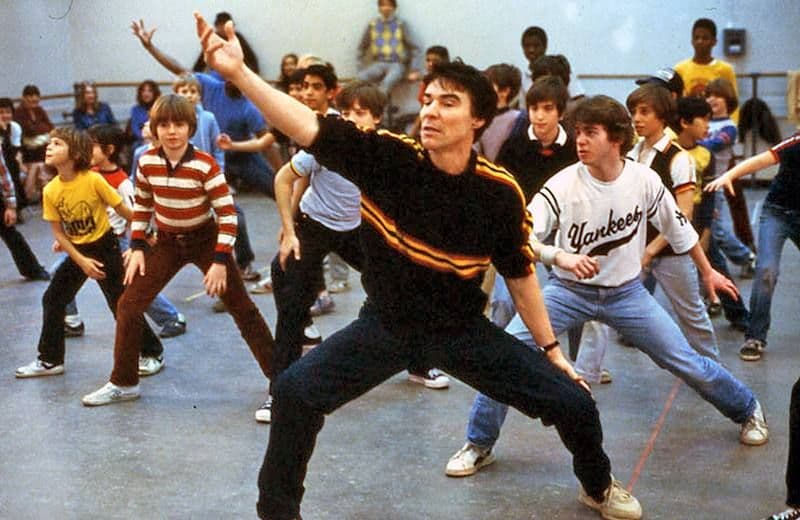
Nearly 30 schools participate, and d'Amboise visits them all, teaching about ten classes a week. His instructors run the program at the school level, doing what he once did alone. They teach each school an individual routine for the year-end extravaganza When he does teach, d'Amboise enchants children with scary or funny stories and with energy bound only by controlled gesture. He breaks into impromptu steps urging dancers to assume his regal posture. They sometimes respond melodramatically, as though lumbering through a caricatured pas de deux. But the fun is in the boldness of the attempt. When necessary, however, d'Amboise can also be quite charmless and autocratic. Dancers freeze when he stops them with a sharp "That's not it!”
A typical school d'Amboise walks into is P.S. 97, the Mangin Elementary School. It is surrounded by housing projects on Manhattan's Lower East Side. Among the messages in the mural on Mangin's northern wall is "Safe Sex or No Sex”; among the administrators is a dean of discipline. A fifth of Mangin’s students are homeless children who live temporarily in the Henry Street Shelter behind the school. Often students move into the shelter at night and arrive at school the next morning wearing all that they own. Last year, Mangin children dropped out of NDI when their families moved to a housing project, leaving ten students to attend classes regularly. Among them were Rhoda Elmore, 13, whose ten-member family survived for two weeks living out of a van that was parked in a Bronx lot; Raymond Yancey, 11, whose family had moved to the Henry Street Shelter from another shelter; and Mark Spicer, 11, who lives in a housing project close to the school.
Lori Klinger, who danced with the city's Eglevsky Ballet, taught the class, often cajoling children to dance. One class went like this: Mark Spicer says he can't dance today; he has a stomachache. Klinger, her arm around his shoulder, walks him to a window, saying that the stranger in the audience (her friend, actually) is auditioning dancers for a new Michael Jackson music video. Mark beams. "He'll dance today," Kiinger announces. She hugs another child, asking sweetly, "Are you OK? Did you eat your breakfast today?" The dancers assemble on stage. The accompanist strikes a tune, and they dance, but not in unison. "Raymond," Klinger says, "is the wall holding you up, or are you holding the wall up?" Minutes later, Mark is irrepressible. With "Ooo la la, oooo!,” he moves dangerously close to the edge of the stage, stomping with each "Ooo" until he lands on Jermyl Hunt's foot. Jermyl sneers. When she met them, Klinger couldn't have been more different from these students. Theirs was a world of rap music, food-stamp trips to bodegas, and rowdy lunches en masse in the school cafeteria; and all too often, they witnessed shouting matches and ugly fights in front of the shelter. Klinger was a visitor from the rarefied world of ballerinas kissed awake by Prince Charmings. She had patience with Mangin kids and treated them warmly, and they soon appreciated her and even made her valentines. One, which pictured Klinger as a stick figure, read: "Lori, I love you. You are always a lady.”
Klinger, when she was their age idolized d'Amboise and often slipped backstage when NYCB stars performed in Saratoga Springs, New York, where she spent her summers. She stole ballet slippers and bobby pins that she would treasure as good-luck charms.
To be working alongside d'Amboise today, she says, is like a dream. She first approached him in a bank line. "I was terrified even just to talk to him," she recalls. "You just don't go up to Jacques d'Amboise and say, 'Hi, I really like what you do and I want to do what you do.'" But she did. Soon afterward she was teaching for him.
D'Amboise's pride and joy, and the heart of NDI. are the scholarship classes, the SWAT and Celebration teams. Celebration dancers are graduates of NDI's summer workshop which ends with a show of dance vignettes. The SWAT Team consists of dancers who distinguish themselves in school classes. As for the name SWAT d'Amboise explains:’It’s like the police have specialists, we have specialists.” To attend Saturday rehearsals, members sacrifice vacations, school trips and playground time. In return, they get the choice roles in the annual Event and free dance lessons; and NDI staff get to know them better than other dancers.
Toting lunch bags and wearing sneakers, about a hundred dancers arrive at 10 in the morning at the Fiorello La Guardia High School of Music and Art, near Lincoln Center. They rehearse for up to six hours, as mothers, brothers and sisters sit along the mirrored wall of the dance studio and watch. D' Amboise teaches a lesson or two in empathy. Once, he had dancers rehearse with their eyes shut, so they would "see" what his blind ballerinas faced.
Among NDI's best dancers was 15-year-old Oya Bangura. Her idols were Eleanor Powell ("She can dance!") and Fred Astaire. Graceful and taller than most other Saturday dancers, she assumed the mannerisms of a grande dame, once demonstrating a difficult step and then blowing kisses at the other dancers. Originally from Sierra Leone, Oya's family moved to Harlem when she was 9. Until her recent move to Boston, she lived near a block-long mural entitled "Street of Dreams" in a neighborhood that was a far cry from the wishful thinking depicted on the wall; on the way home from school, Oya walked past crack houses. “Dance keeps me away from that,” she said, “cause I’m too busy doing this and rehearsing.” She has appeared in all of NDI's major performances of the past five years, including a dance-literature piece, We Real Cool, filmed in 1987; several documentaries about NDI; and a show in Venice, Italy.
Others had been invited, but 11-year-old Carlton Jones, one of his school's most talented dancers, was the only Mangin student to attend Saturday classes. His own feet enthrall him and keep trouble at bay, his mother, Consuelo Washington said. "He dances all day, all morning," she said. "Five-thirty in the morning and he's walking around here! The neighbors be banging on the pipes to stop the noise.”
Instructor Adrienne Ehrlich, founder of the American Dance Theater of the Deaf, taught Carlton to sign a few words so that he could communicate with his deaf partner. Carlton signed for his parents: "The stars belong to the sky/ The sky belongs to the angels / The angels belong to my heart / My heart belongs to me / I belong to poetry and poetry belongs to something unknown.”
"You learn all that?" his father, Rodney, asked. "You're kidding." Consuelo wanted to sign it for a relative who is deaf.
Diagonally across town from Mangin is Trinity, on West 91st Street. The city's oldest continually operating school, Trinity entered its 281st year in 1990 with annual tuition and fees of $11,000. Trinity dancers are more apt to wear fashionable Izod shirts than T-shirts emblazoned with the titles of Spike Lee movies. They pronounce "Jacques" as though they vacation in France. "Oh, I can't meet you this afternooon," one tells another. "I have Jacques' today." Mangin dancers pronounce it ‘Jock.'
Trinity and Mangin danced as partner schools in "Meilleurs Amis," the first pairing of the schools. Two weeks before the Event, the schools rehearsed in Trinity's gym. It was the first time many of Trinity's 27 dancers had met homeless children. Trinity parents liked the idea. One, Barbara Shimkin, said, "Our kids need to know life as it really is, rather than this kind of insulated life of the private school in New York.”
Talk of Carlton's sweetness had preceded him. As soon as the Mangin dancers arrived, several Trinity girls asked, "Where's Carlton?" He lurked bashfully along the sidelines while Mark Spicer boldly strutted in with "Where do we go for snacks?”
Before soda and cookies were served Trinity girls cornered Carlton; Raymond Yancey and Josh Shimkin were playing a one-on-one game with an imaginary basketball; and Mark Spicer (future karate instructor) met Jessica Dee (marine biologist), who was twice his size and equally as brash. As usual, Mark refused to dance. Jessica literally dragged him across the floor. He stood, arms ~ crossed at his chest, and sulked. "Oh, you're not mad," she said. "You're just a faker." "No, I'm not!" he swore. "'No, I'm not!'" she mocked, fists at hips, lips protruding. He ran. She chased him. He fell. She kicked him teasingly. He grinned as though he knew he'd met his match.
Costumes were distributed (red-wine outfits for Trinity, white-wine for Mangin). Carlton emerged from the locker room looking like a bellhop in a pillbox hat, knickers, leotards and a sash. Others followed with the expressions of kids somewhat annoyed by their parents' absurd idea for a Halloween outfit.
Dressed as they were, the Event loomed larger. They danced as if dumbfounded by its certain approach, missing beats and marching like a platoon of hapless legionnaires. Surely aware of their unease, d'Amboise playfully taught Trinity dancers how to swig tipsily from an imaginary glass: "They're a little wine, a little frou-frou, see? Ha-ha!”
In a sort of premiere, the Saturday teams performed part of the Event in a show for children at Alice Tully Hall in Lincoln Cencer. At the five-and-a-hal£-hour rehearsal the day before the show, the teams got their first look at the ballerinas, who danced to prerecorded harpsichord music. Carlton, a rap music fan, remarked, “Ballet is not one of my favorites. But I think it’s nice. I don’t know why, but it somehow amuses me when they run on their tippy toes and jump and spin in the air.
A puzzle quickly pieced together
The Event of the Year is a show whose cast has rehearsed on separate stages in nearly 30 schools for as many weeks, a giant puzzle that d'Amboise envisions early on and pieces together at the last minute. For $15 to $500, ticket buyers are entertained by a few celebrities and a thousand frenetic children, most of whom have never met.
Past Events include "A Day in the Life of Coney Island," starring children cast as fish, sunbathers with radios, seagulls, a roller coaster and waves; and "China Dig," in which children dug their way to China. In "Meilleurs Amis," George Washington and the Marquis de Lafayette, hero of the American Revolution and French aristocrat, dined at a Paris bistro (Act I) and then watched an adaptation of Dumas' The Three Musketeers (Act II).
The plot was so complex, many in the cast didn't understand it. It was a play within a play within a play, the heart of which occurred when ballerinas staged a divertissement for King Louis XVI, a character in a play put on for Washington's fictitious visit to France in 1798. Things got further convoluted when a character sought aid from French heroes and nobility in both the past and the future. But strangest of all was Act 1 when Washington's and Lafayette's meals danced, including red and white wine (Trinity and Mangin). One parent's reaction was: "That's almost like a nightmare,' food just coming alive on your plate in front of you. It's kind of surreal, grotesque.”
Nevertheless, the show was as entertaining for parents as it was realistic for children, one of whom bolted from his seat ("I want to meet George Washington!") and was seized by his father before he could be sucked into a vortex of dancers.
The production had its share of mishaps: artistic temperaments clashed and George Washington was rushed to the hospital with a scratched cornea. But d'Amboise, upon whose vision everyone relied, was at his energetic best. He drilled the cast and directed his staff, including Klinger, who learned to deal with children's antics after catching a boy clowning with glue. "Get that glue out of your ear!" she screamed. Carlton's father, who helped constrain Mangin dancers saw d'Amboise's colossal task and predicted, "That man is going to have a heart attack.”
"From my point of view, he's absolutely crazed." stage manager Andrew Feigin said of d'Amboise. "At first you sort of recoil from his craziness, and then you begin to understand it and that he's not really going to eat you alive, and then you go ahead and do what you need to do. That's just the atmosphere under which this particular thing comes together.”
The cast rehearsed the entire weekend before Monday's Event. Parents found themselves shrugging off children's complaints about long rehearsals with "Well, that's show biz.”
During rehearsals, Manhattan's enormous Felt Forum resembled an indoor playground overrun by children while still under construction. On Friday, as Rachel Passaretti ripped her blouse and brandished the French flag (d'Amboise's re-creation of Delacroix's Liberty Leading the People), artist Red Grooms' 120-foot-long backdrops were hung, a photographer climbed scaffolding for a bird's-eye view, fencers dueled in the lobby, two ballerinas (one black, one white) cast the joint shadow of a Huid-armed Hindu goddess, Oya Bangura gyrated in an African dance and a Fleetwood Mac song blasted through the house in a sound check.
Dancers arrived at the Forum the next day and rehearsed till late afternoon. Just before the dress rehearsal, the Forum became a walking, talking menu. Plump tomatoes bought kosher franks from the concessionaire. A sausage wagged his tongue at a frog's leg. "What are you?" someone asked a chubby girl. "We're chocolate!" she said, obviously pleased at her delectableness. As the show opened and the cast leapt one by one into the spotlight, someone told Caroline Hribar of Trinity, "Break a leg." "Don't say that!" she said worriedly. "Why not? That means good luck.” "I know, but the last time somebody told me that, I almost sprained an ankle."
"Last night I watched you dance”
At show's end, parents hugged and congratulated children, whose hearts danced with pride. Then a throng exited the Forum, sweeping past homeless men who'd settled outside. The excitement kept Carlton awake that night. He finally did fall asleep but was the first in the house to rise. He raced around the rooms in his underwear.
Before Sunday's "preview performance,” d”Amboise gave a pep talk: “This is the hardest thing for every choreographer and every director. We sit and become part of the audience and you are on your own. Traditionally, I forgot to tell you, the most famous thing in show business is that dress rehearsals are a disaster everybody thinks you’ll never get the show on. Last night I sat out and watched you dance and I thought, We’ve got the best show.”
At that moment it wasn't hard to see why d’Amboise is such a success. He was a real director telling a real cast what they'd worked hard to hear: they were stars. And for the director there were other rewards as well. D'Amboise teaches for many reasons: it's fun—“l love play": it teaches patience—‘I’m the worst impatient person in the world, and I hate it": and it's a vent for his creative energy—“The minute I don't have anything to do, any challenges, any tests, any goals, any deadlines, I'm a fat sloppy vegetable, and my mind becomes sluggish, see? So what I'm doing is keeping myself alive. I'm alive!”
He also enjoys watching people discover the arcs, as he did when he was a child. When one of the visually impaired girls, Katerina Papagianeas, learned how to wave her arms fluidly by resting hers on his as he moved, d'Amboise was elated. "God, what a breakthrough for Katerina!" he said later. "All of NDI and all the projects about to happen—they vanished. Nothing else existed except her success. She was just ready.”
Now as Sunday's preview performance unfolded. d’Amboise could watch a thousand youngsters ready for success. The whole cast seemed to be echoing his avowal, ”I’m alive!" as they swirled across the stage in the storming of the Bastille. Marie Antoinette was chased by peasants. Blind girls waving banners were carried across the stage. Revolutionaries crisscrossed it wielding loaves of bread as though they were swords. Rachel tore her blouse on cue. The crowd erupted. And the French Revolution a la d'Amboise ended as a thousand bodies melted omtage and "The Spirit of France" walked among the corpses. "Society as she knew it was swept away and lost forever," the narrator said. Then another voice: "No! No! There will always be our France, as long as there is one left to hear this sound." "La Marseillaise" was sung, and one by one the cast rose stiffly from the dead to dance a rousing finale that Washington and Lafayette couldn't resist joining.
After the preview performance, Mark Spicer smiled triumphantly and said. 'Tm proud of myself. I broke a leg." He was ready for tomorrow's big Event.