There’s An Obvious Curricular Fix to the Youth Mental Health Crisis
National Dance Institute’s Artistic Director Kay Gayner on Why Arts Education is Essential, Not Extracurricular
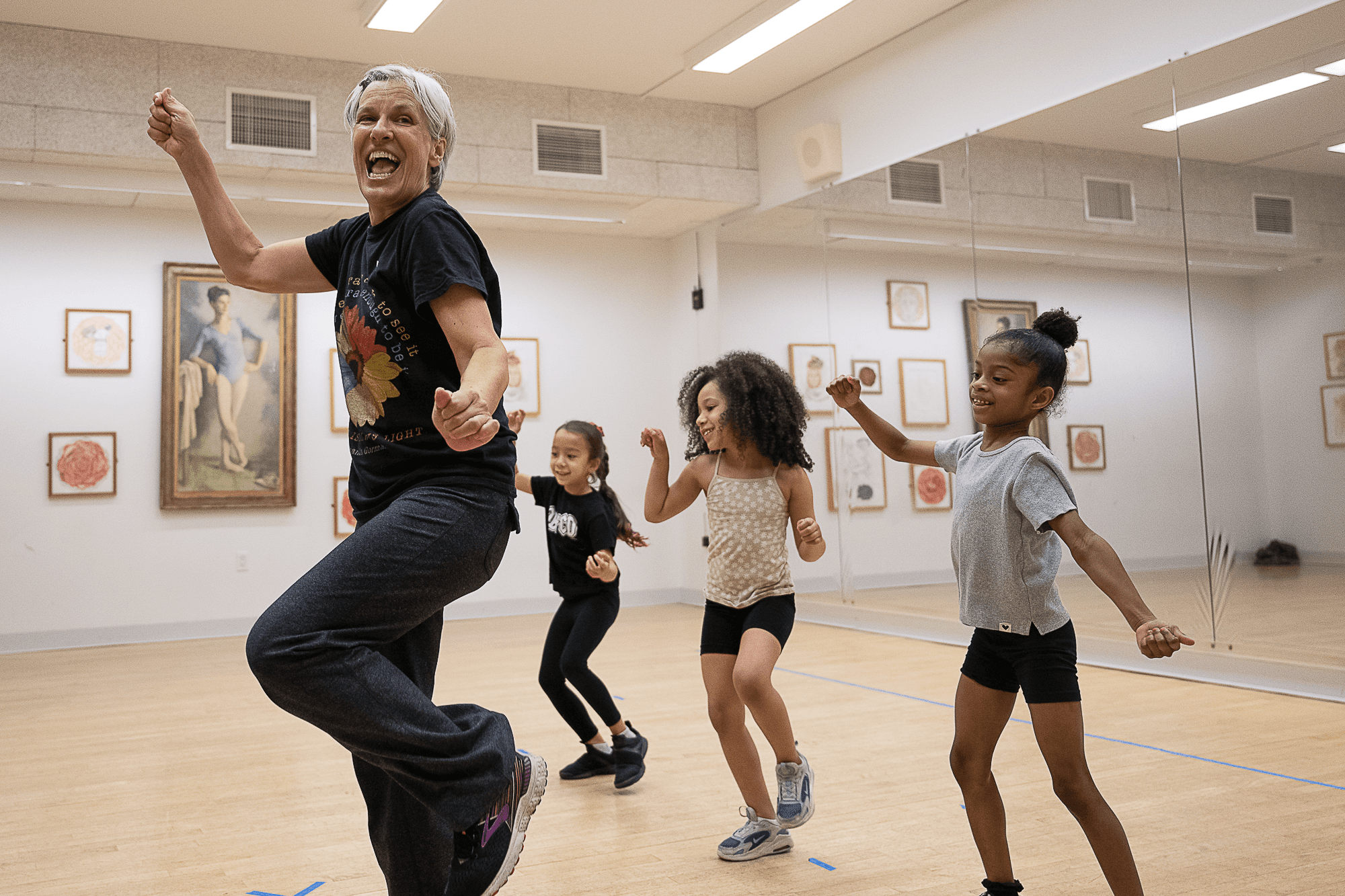
In 1976, Jacques d'Amboise founded NDI with the conviction that dance and music belong at the center of every child's daily learning—not as a bonus for schools with budget left over or families
with time and money to spare.
And throughout this 50th year of NDI, I keep thinking that the need has never been more urgent!
Young people are currently facing epidemic levels of social isolation, emotional dysregulation, and loneliness. They are struggling to focus, to connect, and to believe their presence matters at all. And now, layered on top of this already urgent mental health crisis, we are watching artificial intelligence flatten many of the qualities that make us human: independent thought, original creativity, and the willingness to sit with uncertainty.
We are raising a generation that is lonelier than any who have come before them, and we’re handing them new tools to outsource and reinforce their current thinking instead of teaching them the skills they need to find their own way through.
Americans for the Arts cites that “just 45 minutes of art making can lower the stress hormone cortisol by 25%. More than half of Americans (60%) say the arts have ‘helped them cope during times of mental or emotional distress.’”
It’s clear to me the arts are a powerful antidote to our current public health crisis, and yet, we relegate most programs to after-school or if-you-can-afford-it.
If curing this generation’s loneliness isn’t enough of a motivator, participation in the arts also improves academic performance. “Students engaged in arts learning have higher GPAs, standardized test scores, and college-going rates as well as lower drop-out rates. These academic benefits are reaped by students across all socioeconomic strata.”1
Arts education was actually first introduced into American public schools in the 1800s with a purely capitalistic purpose: use the visual arts to help students develop skills for industry. It wasn’t until after World War I that arts learning became better balanced between the industrial and fine arts.
Arts educators have always spoken highly of the social, emotional, and life skills gained through early arts experiences. But these so-called “soft skills”— collaboration, empathy, creativity, and more — are often perceived as nice-to-have, not as critical as meeting academic standards.
Now, Harvard Business Review research shows that collaboration, empathy, creativity, and more are key to career success, which is about as critical an outcome as educators have in preparing children for the future. 2
1 10 Reasons to Support the Arts, Americans for the Arts (2025)
2 Soft Skills Matter Now More Than Ever, According to New ResearchSoft Skills Matter Now More Than Ever, According to New Research
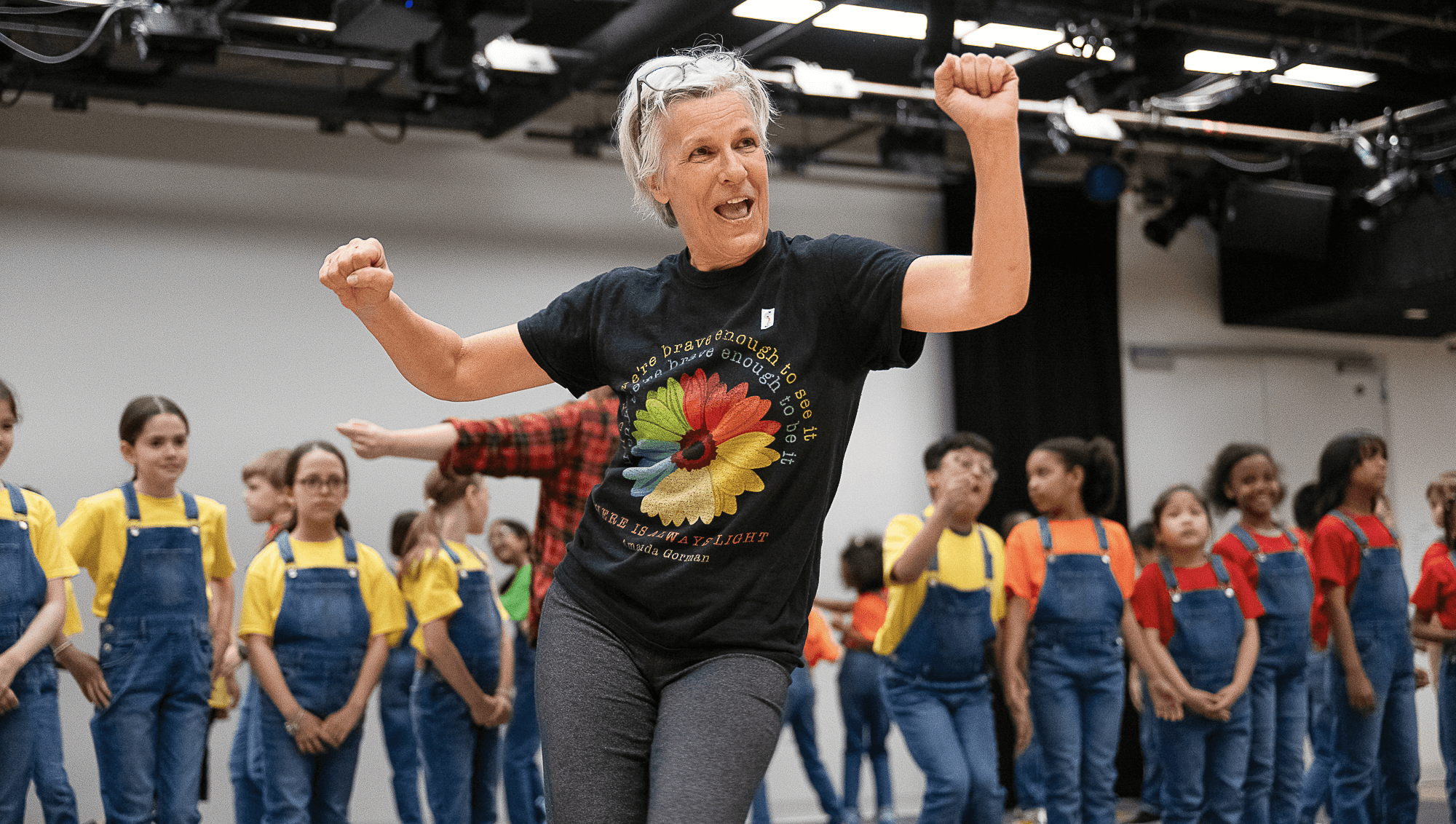
NDI’s founder Jacques d'Amboise grew up in Washington Heights in New York City. His mother enrolled him in ballet classes at age 7 to keep him out of trouble, and he went on to become a principal dancer with the New York City Ballet, performing on the greatest stages in the world. He founded NDI remembering what his early dance training had given him: focus, confidence, joy, and a way of understanding himself and other people that no other subject had offered.
Jacques spent the rest of his life trying to give that experience to every child he could reach.
He believed — with his whole body, because he was a dancer and we dancers believe with our whole bodies — that the arts are how human beings practice being human. “I started National Dance Institute believing that the knowledge of the arts was necessary for a person to be fully learned,” he said. Fully learned because dance and music education delivers coping, relationship-building, and decision-making skills as well as supporting success in academic pursuits.
In 1965, the arts (broadly defined, including both visual and performing arts) were recognized as a core academic subject under the Federal Elementary and Secondary Education Act. Even so, from 1965 to today, an increasing focus on academic achievement, and varying local, state, and federal priorities and budget constraints, pushes arts out of the school day and relegate them to the extracurricular.
When Jacques walked into New York City schools in 1976 and asked principals if they wanted a free dance program during the school day, he made clear these programs were not designed for after school or as a reward but to be woven into the day like math and history. He believed dance should be equally fundamental in every student’s learning.
He brought Mary Tyler Moore, Mikhail Baryshnikov, and Kevin Kline into rooms with children from public schools — not to impress them but to show them what was possible. Excellence, he insisted, is not something withheld until you’ve proven yourself worthy — it is something you’re offered to work towards freely, on day one.
What Jacques (and so many other dance educators, teaching artists, and arts education leaders and advocates) understood intuitively, we are only now beginning to measure and name at NDI. Before inclusion was mandated, NDI was practicing inclusivity. Before researchers began quantifying the loneliness epidemic, NDI was creating belonging across difference. For fifty years, NDI has not only been responding to societal crises. We have been quietly, persistently working to prevent them.
Jacques asked: “How can we love and care about each other and make our world work?” Dance, he believed, is how human beings can practice answering that question. The arts are a mirror and a window — helping us understand ourselves more deeply while opening us to lives and perspectives beyond our own experience. In a moment defined by othering and retreating into tribes, that capacity matters more than ever.
Brand new preliminary findings from NDI's evaluation of impact study, conducted with independent arts research and planning consultancy, WolfBrown, adds to the data in support of arts education.
In a single NDI session, students experience an average of 28 instances of collaboration, 8 instances of acknowledgment and encouragement, and 6 instances of contribution and creativity. Fourth graders with one year of NDI programming scored at the highest levels on the widely used Social Skills Inventory for listening, empathy, helping others, and tolerating differences. Students who rarely raise their hands in traditional classrooms become fully engaged, confident participants in NDI. According to their classroom teachers, the engagement gap between students who “struggle” and those who “thrive” narrows dramatically.
The evidence for arts education is overwhelming. Continuing to treat the arts as nice-to-have isn't just a failure of priorities. It's a crisis of imagination.
.jpg&w=3840&q=75&dpl=dpl_5KAbHqvJLChBm96Dh4byVG3gjKDa)
Jacques called the play, experimentation, inspiration, and joy in dance education “rehearsal for survival.” He meant it. “We have the ability to imagine possibilities,” he said. “Then we have the ability to invent the steps needed to make the dream come true.”
Imagining possibilities is not just a lesson for a career in the arts. It is a lesson for a stronger democracy, and it is the precise skill that artificial intelligence cannot teach. AI can generate the answer. It cannot teach a child to tolerate uncertainty long enough to find their own answers. It cannot replicate the experience of failing in front of your peers and trying again, of collaborating in real time toward something that doesn’t exist yet, or discovering in your own body that your contribution matters. Dance education builds these skills in a live, physical, joyful practice — what the poet Rainer Maria Rilke called learning to “live in the questions.”
Jacques would have no patience for the fear and rigidity of this moment. He would have run buoyantly into our uncertainty and kept right on dancing.
Which is exactly what we are asking our community to do.
Right now, in a moment defined by fear and the pressure to perform only when outcomes are guaranteed, joy is its own act of resistance. Choosing to show up, to move, and to make something with people who are different from you is not a small thing. It’s the muscle our democracy is asking all of us to build right now. Participating in the arts is putting in our reps, teaching us not to watch from the sidelines or settle within the shadows. It requires us to shed some part of our ego, and at the same time, to embrace a sense of confidence in the meaningfulness of our participation.
On July 28, 2026 — what would have been Jacques’ 92nd birthday — NDI invites you to join us at the Naumburg Bandshell in Central Park for our Runs & Leaps Extravaganza. This celebration is open to everyone who has ever been moved by NDI or any form of arts education. And this is not an invitation for you to be a passive observer. We want you to run and leap with us.
Jacques’ question still stands: How can we love and care about each other and make our world work? Help us answer his call on July 28.
Kay Gayner is the Artistic Director of National Dance Institute (NDI), which has served more than 2 million children with its inclusive dance education methodology over the past 50 years. A Princeton University graduate, Gayner began teaching for NDI in 2000, having previously served as assistant to Jacques d'Amboise. She was named NDI's Teacher of the Year in 2009 and Associate Artistic Director in 2017. She is the Co-Creator and Co-Founder of the NDI DREAM Project, which provides children with and without disabilities the opportunity to dance and perform alongside age-matched peers, and she has directed NDI's international programs in Shanghai and Beirut. The insights referenced within this article are preliminary findings from the pilot of an independent evaluation by WolfBrown, an arts research and planning consultancy. The study was developed in collaboration with NDI teaching artists. A more formal evaluation begins Fall 2026.